First principle: train the response you actually need
Reaction time improves fastest when the stimulus, decision, and movement match the environment where you want results. If you are training for a racing-style launch, then a racing-style cue matters more than a generic browser click test. If you want better game reflexes, the training should feel like the game.
That is why “faster reflexes” should not mean chasing one unrealistic number. It should mean responding faster and more consistently in the specific task you care about.
1. Practice with a clean, repeatable stimulus
The fastest way to improve reaction time is to remove noise from the drill. Use a test that gives you the same basic cue each round and enough repetitions to spot a real trend. Repetition matters because a single quick run can just be lucky.
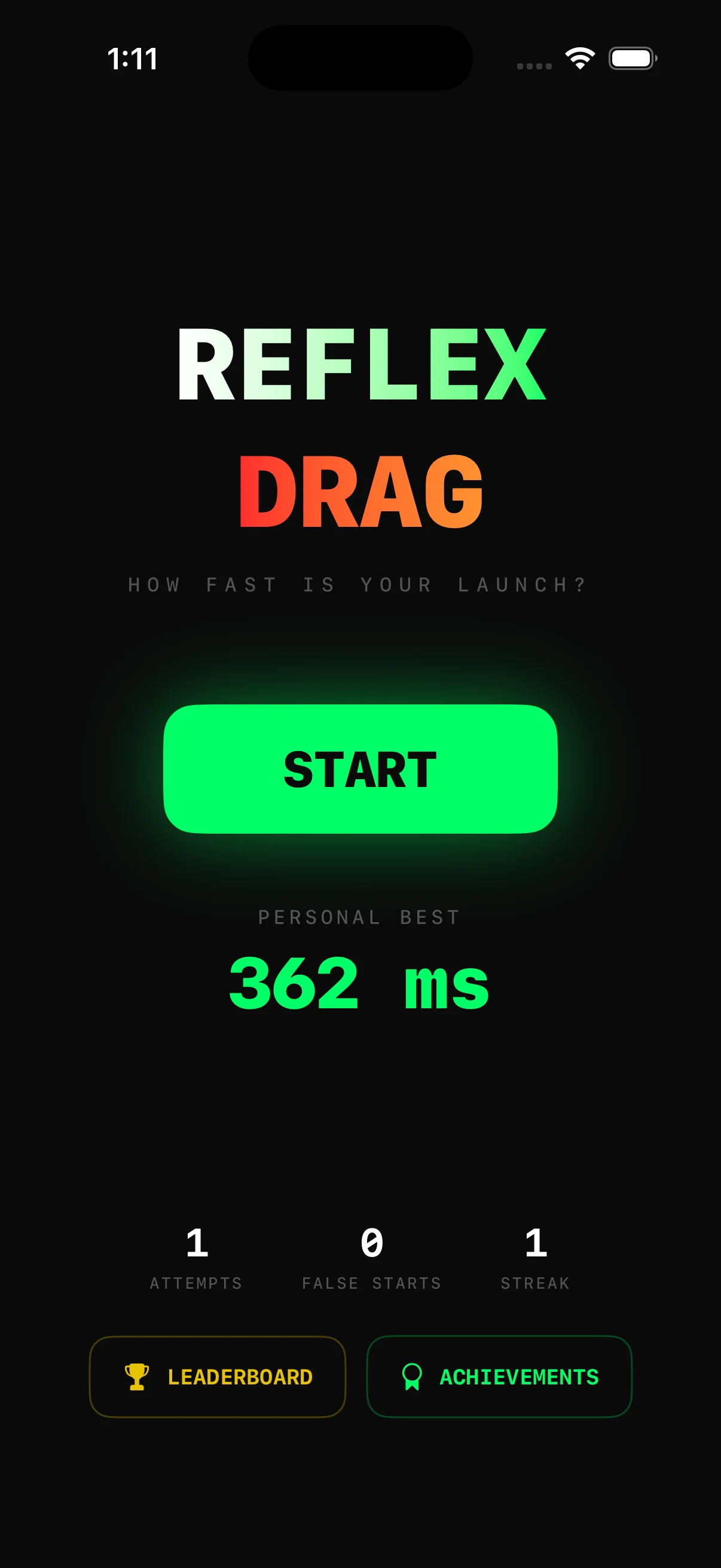
Apps like Reflex Drag help here because they keep the challenge narrow: wait for the signal, react cleanly, avoid false starts, and compare repeated attempts.
2. Improve sleep before adding more drills
Sleep loss slows attention, cue recognition, and movement initiation. If your nervous system is under-recovered, extra practice often turns into sloppy practice. For many people, better sleep produces a larger immediate gain than an extra training block.
If your reaction score suddenly drops, fatigue is one of the first variables to check. Treat recovery as part of training, not as something separate from it.
3. Warm up your eyes, hands, and focus
Fast reactions usually improve after a short warm-up because your attention locks in and your movement feels less hesitant. That does not require anything fancy: a few minutes of easy practice attempts is often enough.
- Do a short ramp-up instead of jumping straight into your best attempts.
- Keep your posture stable so your response path stays the same each round.
- Take short breaks before attention drifts and results become noisy.
4. Reduce decision clutter
A simple cue-response task is always faster than a cluttered one. To improve reaction time, make sure the signal is easy to spot and the action is obvious. That means limiting background distractions, using a comfortable grip, and knowing exactly what you will do when the cue appears.
This is not cheating. It is a core performance principle. The less time your brain spends finding the cue or debating the movement, the faster the response.
5. Measure consistency, not just your best run
People often say they want to improve reaction time when they really mean they want one screenshot-worthy score. That is too narrow. True progress shows up as a tighter cluster of good attempts, fewer slow lapses, and fewer false starts.
Use averages, medians, and streaks to judge whether your reflexes are actually getting better. One outlier number is weak evidence. Repeated clean performance is what transfers into real play.
How to structure a simple reaction-time practice week
Most people do not need marathon sessions. A short, repeatable routine is more effective because it protects focus and makes your numbers easier to compare.
- 3 to 5 sessions a week: enough repetition to improve without turning practice stale.
- 5 to 10 minutes per session: long enough to collect useful attempts, short enough to stay sharp.
- Short warm-up first: use a few easy runs before counting your best sets.
- One rest day after hard focus days: reaction speed drops when attention quality falls.
If you do not know what “good” looks like yet, start with our breakdown of what counts as a good reaction time and compare your training results against a stable baseline.
Why Reflex Drag is a practical reaction-time trainer
Reflex Drag turns reaction training into a premium iPhone loop that feels more like performance than homework. The launch cue is clear, the false-start logic punishes guessing, and the stats make it easier to track whether you are truly getting sharper.
That makes it useful for anyone trying to build faster reflexes without relying on a generic desktop tester that does not match the way they actually play on mobile.
When you want to check whether the training is paying off, use the companion guide on how to take a reaction time test so you are measuring the gains with cleaner habits.
FAQ
How long does it take to improve reaction time?
Small gains can show up quickly when you standardize the drill and remove fatigue, but meaningful consistency usually takes repeated practice over time.
Do hand-eye drills help faster reflexes?
Yes, if they match the cue and movement pattern you care about. Specific drills transfer better than generic activity.
Is chasing one very fast score a good training goal?
Not really. It is better to build a cluster of consistently strong attempts than one isolated run that you cannot repeat.
Can reaction-time practice replace sleep and recovery?
No. Practice helps, but lack of sleep can erase the gains quickly by slowing attention and movement initiation.
Should I practice on the same device every time?
Yes, if you want cleaner comparisons. Changing devices changes the latency and makes trend tracking weaker.